
How Solo Agers Can Manage Touch Deprivation

We humans are wired for connection. Not just emotional connection, but physical connection as well. A reassuring hand on the shoulder, a hug from a friend, or even a casual high-five can help regulate the nervous system and reinforce a sense of belonging.
For many older adults living alone, especially Solo Agers living alone without a spouse, partner, children, or nearby family, days or even weeks may pass without any meaningful human touch. This growing reality makes touch deprivation an important and often overlooked wellness issue for older adults today.
For me, as a solo ager without a pet, I am very aware of my lack of physical touch throughout the week. I started wondering about this and what might be going on with the growing number of people living alone in our disconnected society.
I’m going to unpack the growing issue of touch deprivation here in this blog and offer some strategies for reducing and managing it. I will follow up with a blog about holistic modalities and how they provide sensory stimulation to achieve similar results.
The Growing Trend: More Older Adults Living Alone
Living alone is increasingly common across the United States. Many people reach later life after divorce, widowhood, geographic separation from family, or simply by choice. While independence can be empowering, it can also reduce opportunities for everyday physical contact.
Research shows that about 24% of Americans aged 65 and older living in community settings are considered socially isolated, and 43% of adults over age 60 report frequent feelings of loneliness. These numbers highlight a broader shift in how aging looks today—and why conversations about physical connection are becoming more important.
For Solo Agers in particular, the absence of a life partner or close family involved in daily routines can unintentionally create long stretches of time without even small moments of touch.
What Is Touch Deprivation?
Touch deprivation occurs when a person does not receive enough physical contact to support emotional and neurological well-being. Healthy touch helps regulate stress hormones, lower blood pressure, improve mood, and reinforce a sense of safety.
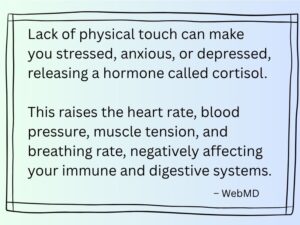 Without it, people may experience:
- Increased anxiety or tension
- Sleep difficulties
- Low mood
- Heightened loneliness
- Reduced sense of connection to others
Touch should not be a luxury. It is part of how the body maintains mind body balance.
Why Older Adults Are Especially Vulnerable
As people age, their opportunities for casual touch often decrease naturally. Retirement reduces workplace interaction. Friends relocate. Partners pass away. Adult children may live far away.
Unlike younger adults, older individuals are less likely to receive spontaneous physical contact during daily routines. Over time, the absence of these small interactions can quietly affect both emotional health and physical comfort.
For Solo Agers, this gap can be even more noticeable—but there are practical ways to address it intentionally.
Seven Practical Ways to Reduce Touch Deprivation
The good news is that meaningful, supportive touch can be incorporated into everyday life in thoughtful and comfortable ways. Consider these options:
- Schedule regular professional touch appointments
Booking a monthly massage, haircut, or manicure/pedicure creates predictable and safe opportunities for structured tactile contact. These routines support both relaxation and connection.
- Spend time with animals
Adopting, fostering, or volunteering with animals provides comforting physical interaction and companionship. Even short visits with therapy animals can be beneficial.
- Use weighted blankets or lap pads
Weighted items provide gentle deep-pressure stimulation that mimics the calming effect of a hug and can support sleep and relaxation.
- Join hands-on activities in your community
Restorative yoga, dance classes, tai chi, or community gardening provide natural sensory engagement and shared experiences with others.
- Practice self-soothing rituals after bathing
Applying warm lotion slowly and intentionally, or gently massaging your hands, feet, or temples, helps activate calming touch receptors in the body. Here is a step-by-step method for hand massage from a learning library in the UK. FIND IT HERE.
- Participate in intergenerational programs
Program that connect older and younger people create natural moments of incidental touch. They can provide the welcome closeness of a supportive arm while walking or a celebratory high-five.
- Volunteer in supportive companion roles
Serving as a visitor, escort, or medical appointment companion allows you to offer reassurance and steady presence to others while also experiencing meaningful physical connection.
Touch Can Also Be Self-Directed
Touch does not always have to come from others. Practicing self-affirming touch during meditation, like placing a hand over your heart, holding your own hands, or gently pressing your palms together, can calm the nervous system and increase body awareness. These small actions may seem simple, but they send powerful signals of safety and care to the brain.
Building Connection Intentionally
As more Americans age while living independently, conversations about emotional and physical connection are becoming essential. Recognizing and addressing touch deprivation is about supporting health, resilience, and quality of life.
Holistic Modalities
Beyond human touch, holistic energy-based therapies like Reiki and Therapeutic Touch are increasingly recognized as effective interventions for touch deprivation. More about that in the next article!
For Solo Agers especially, creating intentional routines that include safe and positive human touch can be one of the most practical ways to maintain well-being while continuing to live independently and confidently. This blog contains seven actionable steps you can pursue to manage touch deprivation. Which one do you think most easily fits into your lifestyle to start doing this week?
Help us Build Our Solo Agers Community!
SoloAgersConnect.com is an online hub for solo agers (also known as elder orphans) to easily locate a curated list of trusted service providers, information, resources, and events they need to connect with help and find similar people to build community and develop friendships.
If you found this article helpful, please share this with a friend and be sure to sign up to receive our newsletter !
Be sure to find us on Facebook and join the Solo Agers Connect group. Let’s grow our community, share information and resources, and build community and friendships.